Exploring Hyper-detailed Florals in 3D Rendering: A Comprehensive Guide
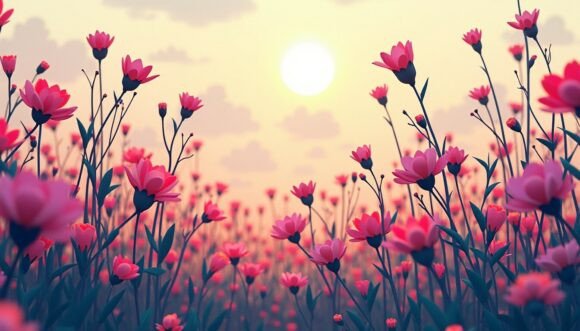
Hyper-detailed florals, when combined with 3D rendering, offer a unique and visually striking approach to digital illustration. This technique involves creating intricate, highly detailed floral designs that are then rendered in three dimensions, adding depth, realism, and a tactile quality to the artwork. The result is a blend of traditional botanical art and modern digital technology, making it a versatile tool for various creative projects.
What Sets Hyper-detailed Florals, 3D Rendering Apart?
The key differentiator of hyper-detailed florals in 3D rendering lies in their level of detail and the immersive experience they provide. Unlike standard 2D illustrations, 3D rendering allows for a more lifelike representation, where each petal, leaf, and texture can be meticulously crafted and viewed from multiple angles. This makes the artwork not just visually appealing but also engaging and interactive.
Compared to other digital illustration techniques, such as vector graphics or simple raster images, 3D rendering offers a higher degree of realism and versatility. While vector graphics are scalable and suitable for clean, flat designs, they often lack the textural depth and detail that 3D rendering can achieve. Similarly, raster images, while capable of high detail, do not offer the same level of interactivity and visual depth as 3D models.
Strengths and Tradeoffs of Hyper-detailed Florals, 3D Rendering
Strengths:
- Realism and Detail: The ability to create highly detailed and realistic floral designs that can be viewed from multiple angles.
- Versatility: Suitable for a wide range of applications, from marketing materials to product design.
- Interactivity: Enhanced user engagement through interactive 3D models, which can be rotated and explored.
Tradeoffs:
- Complexity: Requires more technical skill and software proficiency compared to simpler 2D techniques.
- Resource Intensive: 3D rendering can be computationally demanding, requiring powerful hardware and longer processing times.
- Learning Curve: There is a steeper learning curve for both artists and users who are new to 3D rendering software.
When to Choose Hyper-detailed Florals, 3D Rendering
Hyper-detailed florals in 3D rendering are particularly well-suited for projects that require a high level of visual impact and interactivity. For instance, if you are designing a website or creating a marketing campaign for a luxury brand, the added realism and detail can significantly enhance the overall aesthetic and appeal. Additionally, 3D rendering is ideal for product design, where the ability to view an object from all angles can help in the decision-making process.
However, for simpler, more straightforward projects, such as basic web graphics or print materials, 2D techniques like vector graphics or raster images might be more practical and cost-effective. These methods are easier to implement and require less computational power, making them a better fit for projects with tight deadlines or limited resources.
Practical Applications and Use Cases
Hyper-detailed florals, 3D rendering, can be used in a variety of creative and commercial applications:
- Marketing Materials: Create eye-catching brochures, posters, and advertisements that stand out with their intricate details and realism.
- Website Illustrations: Enhance the visual appeal of websites with interactive 3D floral elements that engage visitors and improve user experience.
- Cards and Invitations: Design elegant and detailed cards and invitations for special events, adding a touch of sophistication and personalization.
- Canva and Procreate Integration: Use the 3D rendered florals in Canva for quick and easy design projects, or draw and edit them in Procreate for more advanced artistic work.
- Printed Merchandise: Apply the 3D floral designs to mugs, tumblers, t-shirts, hoodies, and bags, offering a unique and high-quality product line.
- Vinyl Stickers and Printable Decorations: Create custom vinyl stickers and printable decorations for home and office use, adding a touch of elegance and personal style.
- Scrapbooking: Incorporate the 3D floral designs into scrapbooks, providing a rich and detailed element to your pages.
Decision Factors and Best-Fit Situations
When deciding whether to use hyper-detailed florals, 3D rendering, consider the following factors:
- Project Requirements: Assess the specific needs of your project. If high detail and interactivity are essential, 3D rendering is a strong choice.
- Technical Proficiency: Evaluate your or your team's skills in 3D rendering. If you are new to the technique, consider the time and resources required for training.
- Budget and Resources: Consider the budget and available hardware. 3D rendering can be resource-intensive, so ensure you have the necessary tools and computing power.
- Target Audience: Understand your audience's preferences and expectations. For high-end, luxury, or tech-savvy audiences, 3D rendering can be a significant advantage.
In summary, hyper-detailed florals, 3D rendering, offer a unique and powerful way to create visually stunning and interactive designs. While they come with some tradeoffs, the benefits of realism, detail, and versatility make them an excellent choice for a wide range of creative and commercial projects. By carefully considering your project's requirements and resources, you can determine whether this technique is the right fit for your needs.